
November 12, 2026
Dental Implant Records to Request Before You Travel Home
Traveling home after dental implant treatment should not mean leaving the details of your dental care behind. If a dentist in another city or country needs to examine your implant later, knowing the implant system, restorative components and treatment history can make follow-up much easier.
You do not need to memorize technical terms. You need a clear record of what was done, which components were used and what care comes next. Here is a practical checklist to use before your final appointment.
1. Request the implant identification details
Ask the clinic to document the implant manufacturer, system and location in your mouth. Where available, request the implant model or dimensions and the lot or other identifying information recorded during placement.
Some manufacturers or clinics supply an implant identification card, sticker or “implant passport.” If no physical card is offered, a detailed written treatment record can provide the essential information.
Why does it matter? If a restoration later needs to be serviced, the dentist at home may need to identify compatible components. They should not have to guess which implant was placed.
2. Keep a summary of the surgery and restoration
Request a concise written summary of what procedures were performed and when. It may include extractions, grafting, implant placement, healing components, abutments, temporary teeth and the delivery of any final crowns or bridges.
Ask which materials and attachment systems were used for the restoration. A crown that is screw-retained may require different access for servicing than a cement-retained crown.
The important point is accuracy: a future clinician needs to know what you received, not what the original marketing package was called.
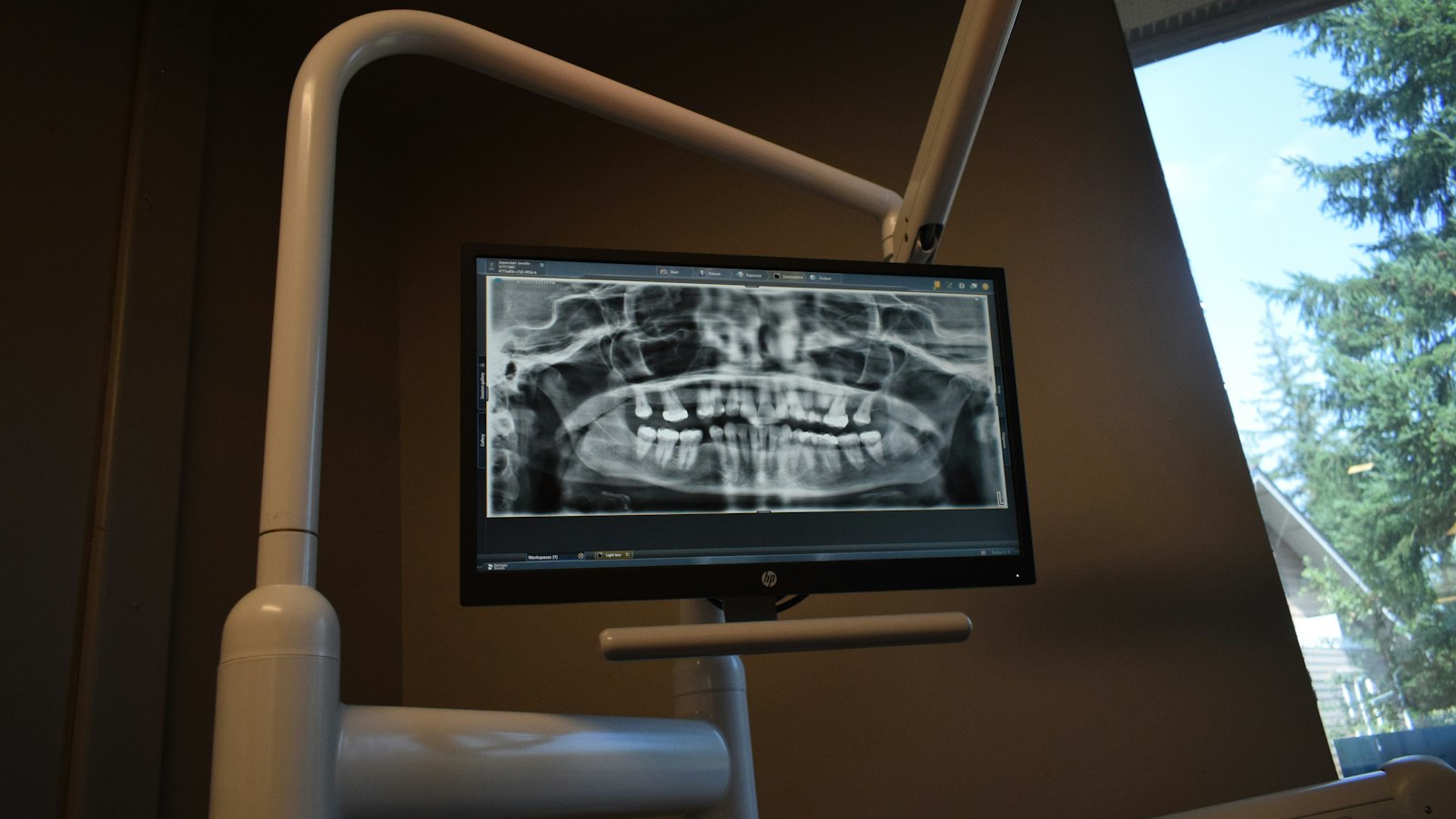
3. Ask for copies of your relevant X-rays and scans
Ask the clinic which pre-treatment and post-treatment images are available. Standard dental X-rays may be supplied as digital image files. Some advanced scans are stored in formats that require specific imaging software.
A photograph of a computer screen may be useful for discussion, but it is not necessarily the same as a complete scan dataset. Ask the clinic whether the original files can be supplied if your dentist at home needs them.
Not every scan must be repeated for every future visit. Your local dentist will decide what current imaging, if any, is clinically necessary.
4. Get the follow-up plan in writing
If your treatment has multiple stages, request the intended timing and purpose of your next appointment. This is particularly important when you have temporary teeth but are still waiting for the definitive restoration.
Ask which decisions depend on healing and what signs should prompt earlier contact with the clinic. If a return trip is expected, clarify what will happen during that visit and whether additional assessments may be needed.
These details are far more useful than a vague promise that your treatment will be finished “soon.”
5. Keep the clinic’s contact information
Save the correct clinic name, contact number and email address, along with the name of the clinician or treatment coordinator who can answer follow-up questions.
If you need help after leaving the country, the dentist at home may also need a professional way to request details from the original clinic. Ask how records can be transferred securely and how quickly the team typically responds.
6. Request instructions for cleaning and maintenance
A single implant crown, an implant-supported bridge, a fixed full-arch restoration and a removable implant denture are not maintained in exactly the same way.
Ask for cleaning instructions that match your restoration. Find out what type of toothbrush, interdental cleaner, floss aid or other product the treating team recommends, and when professional maintenance should be scheduled.
For detailed long-term maintenance guidance, see our dental implant maintenance guide.
This article is about documentation. That separate guide focuses on everyday aftercare.
7. Save invoices and written terms
Keep the itemized treatment invoice, any final cost statement and any written service or warranty terms that were actually issued.
These documents can be useful if you need to confirm what was purchased or which components are covered. Do not assume a warranty pays for flights, replacement components or treatment at an unrelated clinic unless its written terms say so.
Your dental implant records checklist
Before leaving the clinic, check that you have:
- Clinic details, treating clinician and procedure dates.
- Implant manufacturer, system and available component identifiers.
- Implant placement locations and treatment summary.
- Relevant diagnostic or follow-up images.
- Type of final or temporary restoration.
- Dates and instructions for future treatment stages.
- Cleaning and maintenance instructions.
- Contact details for post-treatment questions.
- Final invoices and written service terms, if applicable.
Keep a secure digital copy and, if practical, a paper copy. Avoid sharing identifiable dental records publicly or through an unsecured account.
What if you develop a problem after returning home?
Records can help another clinician understand your treatment, but missing paperwork should not prevent you from seeking care. If you experience severe swelling, uncontrolled bleeding, fever, or other concerning symptoms, contact an appropriate local healthcare professional promptly.
For more about situations that may require follow-up, read our guide on complications after getting dental implants.
Frequently Asked Questions
Does every implant come with an implant passport?
Not necessarily. Some clinics or manufacturers provide cards or labels, while others provide the details in clinical records. Ask for the documented system information.
Should I ask for my dental CBCT scan?
If a CBCT was taken, you can ask whether the clinic can provide the file and what format is available. A future dentist can assess which images are relevant.
Do I need records if my implant feels fine?
Yes. They can help with routine maintenance, repairs or future treatment planning years later.
Can my home dentist use another brand’s parts?
Compatibility depends on the specific implant and component systems. A qualified professional should confirm it; patients should not attempt to buy or fit parts themselves.
Keep care connected after you travel
The easiest time to assemble your implant paperwork is before you leave the treating clinic. If you are still planning treatment, ask about documentation and follow-up arrangements from the beginning. Read our overview of dental implant treatment and contact the team.
This article offers general information and does not replace personalized dental advice.
References:
- American College of Prosthodontists, Maintenance of Full-Arch Implant Restorations


