November 10, 2026
Screw-Retained vs. Cement-Retained Implant Crowns
Two dental implant crowns can look almost identical from the outside yet attach to their implant components in different ways. One uses a small prosthetic screw. The other is secured to an abutment with dental cement. Both approaches are used in restorative dentistry.
If your proposed treatment mentions one of these systems, the difference is worth understanding. It can affect how a crown is placed, how a dentist gains access for repairs, and which complications need attention.
What is a screw-retained implant crown?
A screw-retained crown is attached with a prosthetic screw through an access channel in the restoration. Once fitted, the access opening is normally sealed with a restorative material.
A key advantage is retrievability: if access to a component is needed, a dentist may be able to remove the crown without destroying it. This is not a guarantee of easy removal in every situation, and screws or related components can still loosen or fail.
Screw-access position also matters. Depending on implant angulation, the opening may emerge on a chewing surface or another area. The dentist and laboratory must consider its location as part of the restoration design.
What is a cement-retained implant crown?
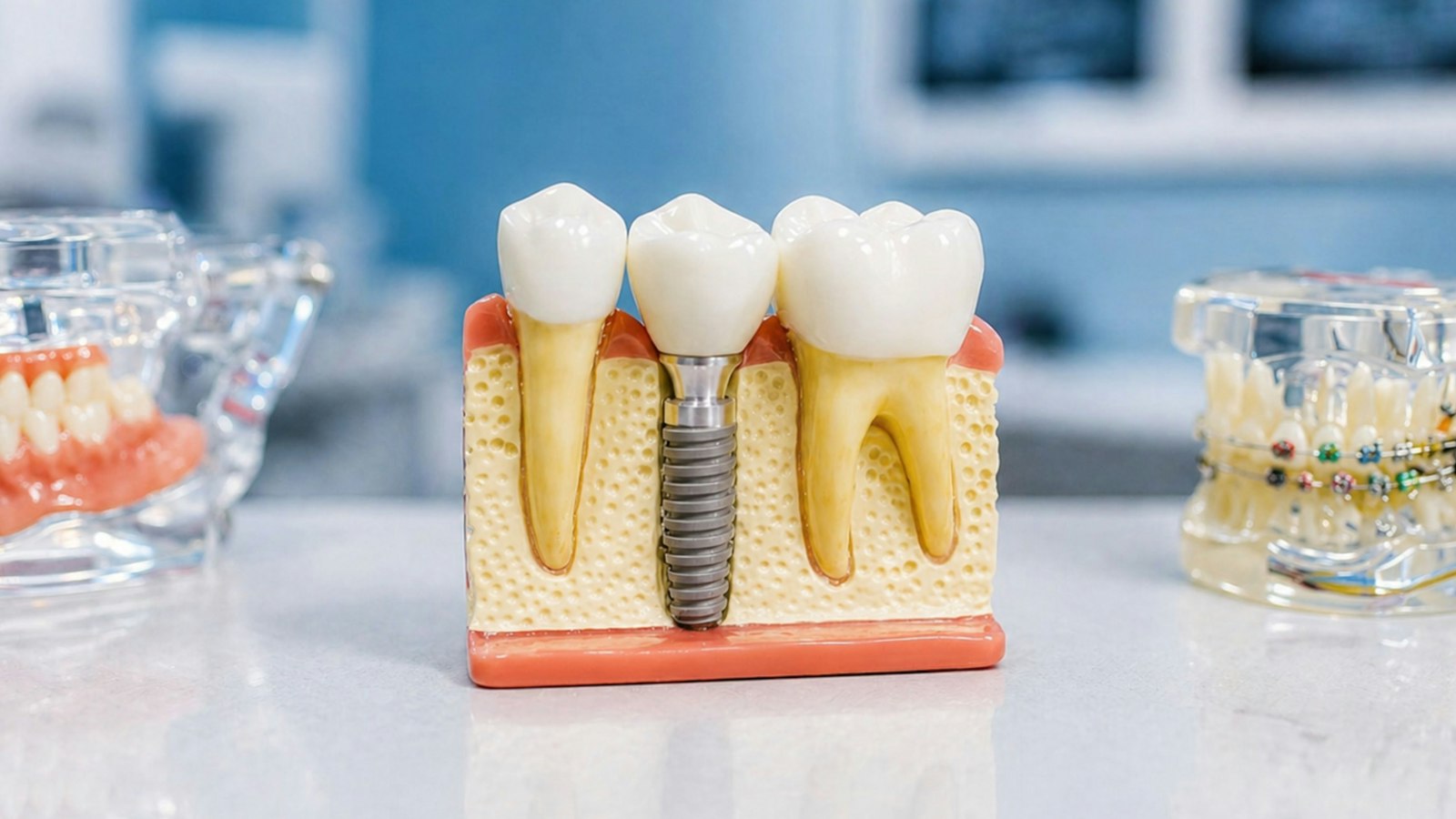
A cement-retained crown fits over an abutment connected to the implant and is held in place using dental cement. The approach resembles how many conventional tooth-supported crowns are placed.
A cement-retained design can be useful when screw-access positioning makes a screw-retained design difficult or less desirable. But care is needed to control the cement and its margin. Excess cement left around an implant can contribute to inflammation and related problems.
Cement retention also affects retrieval. Depending on the cement and design, taking the crown off for repairs may be more difficult.
How do the two designs compare?
1. Access for maintenance and repair
A screw-retained crown is generally designed with a route for removal. This can be valuable if the dentist needs to examine a component or address a technical issue. A cemented crown may not be retrievable without damaging it, though that depends on how it was placed.
2. Appearance and screw-access position
Screw-retained crowns have an access opening that is sealed after installation. Its location can matter esthetically, especially for front teeth. A cement-retained restoration may avoid this concern in a particular implant position.
The appearance of the finished crown depends on much more than retention: contour, material, color, gum health and laboratory design also matter.
3. Technical and biological complications
Screw-related loosening and wear are among the technical concerns with screw-retained restorations. Cement-retained restorations can experience loss of retention or problems associated with residual cement. Neither method eliminates mechanical or biological complications.
4. Implant position and component compatibility
Some implant positions permit a straightforward screw access channel. Others require a different design or components. The clinician must also consider the implant brand and whether the proposed abutment or restorative component is compatible with the existing system.
Does research show one approach is better?
No universal answer applies to every crown. The International Team for Implantology has reviewed screw-retained and cement-retained implant-supported restorations and notes that both approaches have particular complications and benefits.
That means a confident recommendation should be supported by the actual treatment plan, not by a claim that one design never fails. Ask your clinician why the chosen retention method makes sense for your implant position and restoration.
Does this change how you clean the implant?
You still need to clean the area around an implant crown carefully, regardless of retention type. Healthy surrounding tissues and professional follow-up are important to the long-term function of both designs.
The crown should not feel mobile or change position when chewing. If you notice movement, swelling, bleeding or persistent discomfort, contact a dental professional rather than attempting to tighten, remove, or reglue the crown yourself.
For broader questions about maintenance once you return home, see our dental implant maintenance guide.
Questions to ask before agreeing to your final crown
- Will my implant crown be screw-retained or cement-retained?
- Why does this attachment work for my implant position?
- What happens if the crown chips, loosens, or needs repair?
- Can another dentist access the restoration if I return home?
- Which implant and abutment systems were used?
- If cement is used, how will excess cement be managed?
- What is included in the restorative quote and maintenance plan?
You can also read our guidance on comparing implant quotes.
Frequently Asked Questions
Can I see the screw in a screw-retained implant crown?
The access channel is usually sealed with restorative material after installation. Visibility depends on the location and restoration design.
Does a cement-retained crown mean the implant is glued into my jaw?
No. The implant is surgically placed in bone. The cement connects the crown to an abutment above the implant.
Can a screw-retained crown be removed later?
It may be retrievable by the dentist when necessary, although individual circumstances affect removal.
Are screw-retained crowns guaranteed to last longer?
No. Both designs can function well and both can have complications. The clinical plan and maintenance matter.
Understand what is included in your restoration
A treatment estimate that only says “implant and crown” may leave out an important detail: how the crown will attach. Review the options with the treating team. For an overview of dental implant treatment, visit our dental implants in Mexico page and request a consultation.
This article is general educational information, not a diagnosis or personal clinical recommendation.
References: